ṣaḍ (six) + aṅga (parts) means six parts. For every mantra there are six parts and each such part is under the control of a god/goddess called aṅaga devatā-s of the presiding deity. These six parts are heart, head, tuft of hair, arms, eyes and weapons. Before and after the recitation of a mantra, the deities of these parts are worshipped in our bodies by touching the respective body parts with fingers. This is with regard to the external worship.
This nāma says that She is surrounded by these six aṅaga devatā-s.
षाङ्गुण्य-परिपूरिता (387)
ṣāḍguṇya-paripūritā
She is endowed with six qualities that are considered auspicious. They are prosperity, righteousness, fame, material wealth, wisdom and dispassion. Dispassion because, She will not show any special favours to a select few, transcending the law of karma.
नित्य-क्लिन्ना (388)
Nitya-klinnā
Her ever compassionate nature is referred here. Nitya-klinnā is the name of a tithi nityā devi (third day of the lunar fortnight).
निरुपमा (389)
Nirupamā
She is without comparison.
निर्वाण-सुख-दायिनी (390)
Nirvāṇa-sukha-dāyinī
Nir (freed) + vāṇa (derived from bāṇa, meaning body). When mind is freed from body, it leads to bliss. When higher level of consciousness is reached, physical body is forgotten. When bodily afflictions are dissolved, what is derived is eternal bliss. She confers this bliss to those who worship Her.
नित्या-षोडशिका-रूपा (391)
Nityā-ṣoḍaśikā-rūpā
This refers to the sixteen deities representing sixteen lunar days and they are worshipped in Śrī Cakra. The sixteenth deity is Lalitāmbikā Herself. These fifteen deities are said to represent fifteen bīja-s of Pañcadaśī mantra and Lalitāmbikā as the sixteenth deity representing ṣodaśī mantra. ṣodaśī mantra has sixteen bīja-s, the additional bīja being श्रीं (śrīṁ), the Lakṣmī bīja. ṣodaśī mantra is considered as the most powerful mantra of all. This is the mantra meant only for the final liberation.
श्रीकण्ठार्ध-शरीरिणी (392)
Śrīkaṇṭhārdha-śarīriṇī
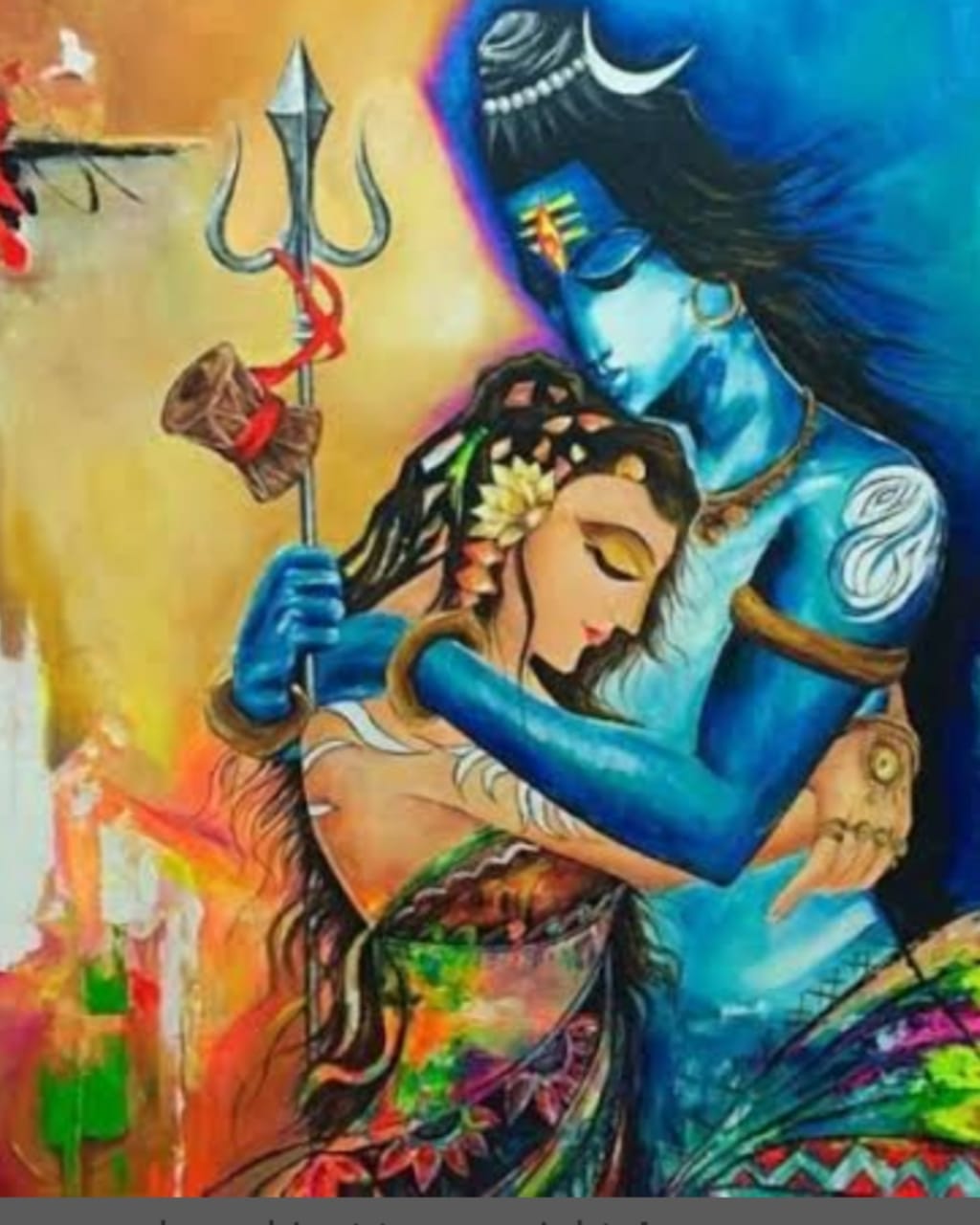
She has half the body of Śiva. Śrīkaṇṭha is another name of Śiva, since He holds poison in His throat. Śrī also means poison and kaṇṭha means throat.
प्रभावती (393)
Prabhāvatī
She is endowed with the power of effulgence. She is surrounded by eight devi-s each representing one of the aṣṭama siddhi-s. They are very powerful and illuminant and known as aṇimā, laghimā, mahimā, īśitva, vaśitva, prākāmya, prāpti and sarvakāma.
These eight devi-s are called prabha. Prabhāvatī is the One who is surrounded by prabha-s.
प्रभारूपा (394)
Prabhārūpā
She is said to be in the form of Supreme light.
प्रसिद्धा (395)
Prasiddhā
She is highly celebrated. She is in the form of inner Self of all living beings.
परमेश्वरी (396)
Parameśvarī
She is the supreme ruler.
मूलप्रकृतिः (397)
Mūlaprakṛtiḥ
Prakṛti is the root of all creations. This is also known as the Brahman with attributes or saguṇa Brahman. Śaktī is called mūlaprakṛtiḥ because She is the part of Brahman without which creation is never possible.
अव्यक्ता (398)
Avyaktā
Avyakta is the state of prakṛti in its un-manifested form, the first stage of the Brahman that cannot be explained, as this is the purest form, without parentage. This stage is also known as turya or the fourth state of consciousness. It is the non-dualistic state, where the Brahman without a second is realized.
व्यक्ताव्यक्त-स्वरूपिणी (399)
Vyaktāvyakta-svarūpiṇī
It is vyakta (manifested) + avyakta (un-manifested) svarūpiṇī. She is both in the manifested and un-manifested form. Vyakta means perishable and a-vyakta means imperishable. The soul-Brahman relationship is cited here. This nāma means the first signs of creation and final liberation are both caused by Lalitāmbikā.
व्यापिनी (400)
Vyāpinī
She is all pervading. Because She is mūlaprakṛtiḥ and avykatā, She is all pervading.
विविधाकारा (401)
Vividhākārā
She has many forms.
She is the Supreme Mother or Brahma rūpa. As the sustainer, She is Viṣṇu rūpinī .
As the destroyer, She is Rudra rūpā. As a witness to the total dissolution, She is mahā pralaya sākṣiṇī.
विद्याsविद्या स्वरूपिणी (402)
Vidyāvidyā svarūpinī
She is the form of knowledge and ignorance. Vidyā is not just knowledge.
It is the supreme knowledge leading to self-realization. Avidyā is the opposite of vidyā. In the stage of avidyā, one continues to be associated with performing rituals like fire rituals, external worship etc. Only when avidyā dissolves into vidyā, the final liberation is attained.
महा-कामेश-नयन-कुमुदाह्लाद-कौमुदी (403)
Mahā-kāmeśa-nayana-kumudahlāda-kaumudī
Mahā-kāmeśa is Śiva, nayana – eyes, kaumuda – the moon which shines bright during the second half of November and first half of December (the month of Kārttika), kumuda – lotus flower.
On seeing Lalitāmbikā, Śiva’s eyes become wide open like lotus flower blossoming when the moon shines.
भक्त-हार्द-तमो-भेद-भानुमद्-भानु-सन्ततिः (404)
Bhakta-hārda-tamo-bheda-bhānumad-bhānu-santatiḥ
She dispels the darkness of ignorance of Her devotees. This is compared to the sun dispelling the darkness when it rises.
This nāma and the next one discuss about worshipping Her secretively. Secretive worship means worshipping Her internally without resorting to external rituals. Worshipping Her within is considered as a powerful tool to realize Her, as only Her subtlest form Kundalini can be worshipped within.
रहस्तर्पण-तर्पिता (382)
Rahastarpaṇa-tarpitā
This nāma could be interpreted as ‘secretive oblations’ , wherein all dualities are sacrificed into the internal fire (fire generated in mūlādhāra cakra to keep the body alive).
In the next few nāma-s Her Śabda (sound) Brahman form is going to be discussed. The literal meaning of ‘Brahman’ is growing, developing, swelling, expanding, evolving etc.
In a human being Brahman or Maya or the Absolute is said to be in the form of kuṇḍalinī energy ,posited in mūlādāra cakra or base cakra. Sound originates from this Absolute form. There are three stages in manifestation of the Absolute. Its called parā in the unmanifested form and is considered as supreme and is full of energy.
प्रत्यक्-चिती-रूपा (367)
Pratyak-citī-rūpā
Pratyak means turned towards the inner soul and cit means consciousness. She is in the form of inner consciousness which is known as inner Self.
पश्यन्ती (368)
Paśyantī
Paśyantī is the second stage in the evolution of sound, the primary stage being Para.
परदेवता (369)
Paradevatā
She transports power to other gods and goddesses, meaning that She is the supreme amongst gods and goddesses.
मध्यमा (370)
Madhyamā
The next higher level of paśyantī is madhyamā. This stage is called intermediary stage between the origin and the end of speech.
वैखरी-रूपा (371)
Vaikhari-rūpā
Vaikhari is the fourth and final form of sound in its evolution. This is the state wherein the sound is heard.
भक्त-मानस-हंसिका (372)
Bhakta-mānasa-haṁsikā
Hamsa means Swan.
The swans have a few exceptional qualities. If water and milk is mixed, swans consume only the milk leaving water alone. This nama says that one should take cognizance of only good things, leaving bad things aside, though the world exists as the mixture of the two. She acts as a Swan in the minds of Her devotees.
कामेश्वर-प्राण-नाडी (373)
Kāmeśvara-prāna-nāḍī
She is the vital force of Kāmeśvara, the Supreme form of Śiva. The eternal Śiva cannot function without Śaktī and by the effect of Her māyā the universe exists today. That is why She is called the life energy of Śiva.
कृतज्ञा (374)
Kṛtajñā
She is aware of all the actions of the universe. She is capable of transcending the secrecy or privacy, which ignorant men think that nobody is capable of hearing or seeing.
Kṛtajñā also means "a person who includes within himself all the good things that other people do. He is the sum total of all good things in the world".
काम-पूजिता (375)
Kāma-pūjitā
She is worshipped by the lord of love Manmatha.
शृङ्गार-रस-संपूर्णा (376)
Śṛṅgāra-rasa- saṁpūrṇā
She is in the form of essence of love.
ज़या (377)
Jayā
She remains victorious. She is the embodiment of victory.
जालन्धर-स्थिता (378)
Jālandhra-sthitā
Jālandhara pīṭha refers to the heart cakra, where the sound is further refined, to become madhyama, the penultimate stage of sound before its actual delivery. This is one of Her Śabda Brahman forms.
ओड्याण-पीठ-निलया (379)
Oḍyāṇa-pīṭha-nilayā
She dwells in the oḍyāṇa-pīṭha, the fourth pīṭha of the gross body. The fully developed sound at this stage is delivered in the form of vaikari. The oḍyāṇa-pīṭha, corresponds to the throat cakra or viśuddhi.
बिन्दुमण्डल-वासिनी (380)
Bindumaṇḍala-vāsini
She dwells in the bindu maṇḍala. The bindu is the central dot of Śrī Cakra where She resides along with Her consort Kāmeśvara. This point of Śrī Cakra is considered as the most powerful point because it is the abode of both Kāmeśvara and Kāmeśvarī.
The few coming namas talk about the physical body and the subtle body, that is, kshetra and Kshetrajna.
क्षेत्र-स्वरूपा (341)
Kṣetra-svarūpā
Kṣetra is gross physical body and kṣetrajña is the soul, subtle body. Kṣetra is perishable, whereas the knower of Kṣetra, kṣetrajña is eternal and imperishable.
She is said to be in the form of kṣetra and Shiva is said to be Kshetrajna.
क्षेत्रेशी (342)
Kṣtreśī
Wife of Kṣetrajña (Śiva) is Kṣtreśī (Śaktī). It is like Bhairava and Bhairavī
क्षेत्र-क्षेत्रज्ञ-पालिनी (343)
Kṣetra-kṣetrajña-pālinī
The protector of both kṣetra and Kṣetrajña. She protects both viz. the gross body and the soul.
क्षय-वृद्धि-विनिर्मुक्ता (344)
Kṣaya-vṛddhi-vinirmuktā
She is beyond growth and decay. These are associated with all mortals.
क्षेत्र-पाल-समर्चिता (345)
Kṣetra-pāla-samarcitā
Ksetra, the body is protected (Pala) by panchabhuta, five elements. Each of these five elements is represented by a demigod. She's worshiped by them also.
विजया (346)
Vijayā
She is always victorious.
विमला (347)
Vimalā
She is devoid of impurities.
वन्द्या (348)
Vandyā
She is adorable. We adore someone by merely seeing him and without even knowing him. This happens because he draws divine energy from the cosmos and this gets reflected through his body as vibrations. Such vibrations are normally drawn through an orifice in the crown cakra and also through medulla oblongata which is situated beneath the back of our head.
The third eye, the pineal gland and the back head cakra are placed in a straight line. When one is able to look within through the ājñā cakra, the energy generated passes through the pineal gland and gets released through the back head cakra and in the process cleanses bio-plasma body. This process not only accelerates one’s spiritual progress but also rarely confers some super human powers (siddhi-s).
वन्दारु-जन-वत्सला (349)
Vandāru-jana-vatsalā
She loves Her devotees like a mother who loves her children.
वाग्वादिनी (350)
Vāgvādinī
She prompts speech or She is in the form of speech itself. She is the origin of speech, She is Vāgvādinī.
वामकेशी (351)
Vāmakeśī
Wife of Vāmakeśvarā is Vāmakeśī. Śiva introduced twenty eight tantra-s (as per Śaivasiddhānta) to the universe and one among them is called Vāmakeśa tantra. This deals only with Her worship, hence She is called Vāmakeśī.
Vāma has innumerable meanings such as beautiful, splendid, Śiva, Durgā, Lakṣmī, Sarasvatī, a beautiful woman, wife, left side, etc. Keśa means hair. Then this nāma also means a beautiful woman (Goddess) with a beautiful hair.
वह्नि-मण्डल-वासिनी (352)
Vahni-maṇḍala-vāsinī
She lives in the sphere of fire. Vahni means fire. The sphere of fire is said to be in mūlādhāra cakra and in ākāś or ether.
भक्तिमत्-कल्प-लतिका (353)
Bhaktimat-kalpa-latikā
Kalpa is a divine creeper that grants boon to those who sit under it. Latika means spread over. She gives boon to Her devotees spread over the humanity, like the divine creeper, kalpa.
पशु-पाश-विमोचनी (354)
Paśu-pāśa-vimocanī
Paśu-s are the individual souls and pāśa is the bondage .
Ignorance is the cause for bondage that veils the true Brahman. She relieves her devotees from this bondage.
संहृताशेष-पाषण्डा (355)
Saṃhṛtāśeṣa-pāṣaṇḍā
She destroys all those who act against the principles of Veda-s.
सदाचार-प्रवर्तिका (356)
Sadācāra-pravartikā
She removes the innate ignorance of the soul to realize the Brahman. Sat refers those who perform noble deeds and ācāra means the righteous acts performed by them. She makes the ignorant people to pursue the righteous path to realize the Brahman.
तापत्रयाग्नि-सन्तप्त-समाह्लादन-चन्द्रिका (357)
Tāpatrayāgni-santapta-samāhlādana-candrikā
By Her sheer grace and moon like presence, she destroys the miseries caused by afflictions and showers happiness to Her devotees.
तरुणी (358)
Taruṇī
She is eternally youthful
तापसाराध्या (359)
Tāpasārādhyā
She is worshipped by ascetics.
There is yet another interpretation. Tāpa means bondage which is the root of all miseries. Sārādhyā is split into sāra (essence) + ā (deep) + dhyā (dhyān or meditation). The bondage arising out of saṁsāra can only be removed by meditating on Her.
तनुमध्या (360)
Tanumadhyā
She has slender waist.
There is a meter by name tanumadhya. Meter or chandas refers to the number of alphabets or words in a verse as per Sanskrit literature. She is said to be in the form of this meter. An example for such a reference can be found in Bhagavad Gīta X.35. Krishna says Gāyatrī chandasāmahaṁ (गायत्री चन्दसामहं) meaning that He is in the form Gāyatrī meter.
तमोsपहा (361)
Tamopahā
Tamas means ignorance and its main components are mental darkness, ignorance, illusion, error. Tamo guṇa is one of the three guṇa-s. An ignorant person is said to have tamo guṇa. She is said to remove this ignorance.
चितिः (362)
Citiḥ
She is in the form of eternal knowledge. Cit can be explained as pure knowledge that helps in realizing the Brahman.
तत्पद-लक्ष्यार्था (363)
Tatpada-lakṣhyārthā
Tat means that and pada means word. Tatpada (that word) means THAT referring the Brahman. She's the embodiment of THAT.
She is in the middle of solar orbit. Anāhat cakra is also called bhānu-maṇḍala and kuṇḍalinī also glitters like gold. Possibly, this nāma could mean Her kuṇḍalinī form.
भैरवी (276)
Bhairavī
Wife of Bhairavā (Śiva) is Bhairavī. They are inseparable.
A girl of twelve years is also called as Bhairavī.
भगमालिनी (277)
Bhagamālinī
Bhaga has many meanings. Goddess Savitṛī is also addressed as Bhaga. It also means good fortune, happiness, welfare, prosperity, dignity, majesty, distinction, excellence, beauty, loveliness, etc.
She is in the form of Bhagamālinī, one of the tithi nitya devi-s.
पद्मासना (278)
Padmāsanā
She is seated on a lotus or She is sitting in the posture of padmāsana (a yogic way of sitting, cross legged). Padma means lotus. When one is seated in padmāsana, the posture will appear like a lotus.
भगवती (279)
Bhagavatī
Bhaga refers to six qualities of Śaktī viz. supremacy, righteousness, fame, prosperity, wisdom and discrimination. As one who's endowed with all these qualities, she's called as Bhagavathi
पद्मनाभ-सहोदरी (280)
Padmanābha-sahodarī
She is the younger sister of Lord Viṣṇu.
उन्मेष-निमिषोत्पन्न-विपन्न-भुवनावली (281)
Unmeṣa-nimiṣotpanna-vipanna-bhuvanānavalī
Unmeṣa means opening eye lids and nimiṣ means closing of eye lids. The creation and dissolution of the universe happens at the wink of Her eyes. When She opens Her eyes, universe is created and when She closes Her eyes, universe is dissolved (vipanna).
सहस्र-शीर्ष-वदना (282)
Sahasra-śīrṣa-vadanā
Sahasra in this context means infinite and literally means thousand. She has countless heads and faces.
सहस्राक्षी (283)
Sahasrākṣī
She has thousands of eyes.
सहस्रपात्(284)
Sahasrapād
She has thousands of feet.
आब्रह्म-कीट-जननी (285)
Ābrahma-kīṭa-jananī
The Supreme creator, She creates from Brahma to the smallest insect.
वर्णाश्रम-विधायिनी (286)
Varṇāśrama-vidhāyinī
Varṇāśrama means the order of life as expounded in Vedās. Veda-s classify people based upon their knowledge and capabilities. As creator of the Vedas, she is the one who has expounded the order of life.
निजाज्ञा-रूप-निगमा (287)
Nijājñā-rūpa-nigamā
Namas 287 and 288 deal with karma kanda of the Vedas.
She conveys Her commands through Veda-s.
पुण्यापुण्य-फलप्रदा (288)
Puṇyāpuṇya-phalapradā
Puṇyāpuṇya consist of two words puṇya + a-puṇya. Puṇya means the good or right, virtue, purity, good work, meritorious act, moral or religious merit, and a-puṇya means the illusionary puṇya. Results arising out of such actions are transferred to one’s karmic account at Her command as She is the Lord of karma-s.
श्रुति-सीमन्त-सिन्दूरी-कृत-पादाब्ज-धूलिका (289).
Śruti-sīmanta-sindūrī-kṛta-pādābja-dhūlikā
Veda-s are considered as the most sacred texts of all. In this nāma the four Veda-s are personified as goddesses. Lalithambika is so Supreme as the absolute Brahman that these Goddesses are satisfied by wearing the dust in Her feet in their parting hair and get satisfied that they are at least able to wear the dust that gives them some knowledge (the knowledge of the Brahman) about Her.
सकलागम-संदोह-शुक्ति-संपुट-मौक्तिका (290)
Sakalāgama-saṃdoha-śukti-saṃpuṭa-mauktikā
This nāma says that the great scriptures of Veda-s and agama śāstra-s are enclosed within the tiny piece of Her nose ring made of pearl.
पुरुषार्थ-प्रदा (291)
Puruṣārtha-pradā
Puruṣārtha is the fourfold values of human life. They are dharma (righteousness or virtues), artha (wish or purpose), kāma (desires and pleasures) and mokṣa (the liberation). She is the giver of this puruṣārtha.
पूर्णा (292)
Pūrṇā
She is the perfect (without blemishes) totality of everything.
भोगिनी (293)
Bhoginī
Bhoga means luxuries. She is the enjoyer of all luxuries.
भुवनेश्वरी (294)
Bhuvaneśvarī
Bhuvana means the universe. She is the ruler (Īśvari) of this universe.
अम्बिका (295)
Ambikā
The mother of the universe.
अनादि-निधना (296)
Anādi-nidhanā
She has neither a beginning nor an end. The nature of the Brahman is described, who alone is infinite.
हरिब्रहमेन्द्र-सेविता (297)
Haribrahamendra-sevitā
Hari (Viṣṇu), Brahma and Indra worship Her. In Śrī cakra pūja, Hari, Brahma and Indra are all worshipped.
नारायणी (298)
Nārāyaṇī
The creations made out of the Brahman are known as Narani and the abode of Narani is called Narayana. The feminine gender of Nārāyaṇa is Nārāyaṇī. This nāma also reconfirms Her Brahmanic status.
नाद-रूपा (299)
Nāda-rūpā
She is in the form of sound
नाम-रूप-विवर्जिता (300)
Nāma-rūpa-vivarjitā
She is without name (nāma) and form (rūpa). Vivarjitā means devoid. She is beyond names and forms, an exclusive quality of the Brahman.
ह्रींकारी (301)
Hrīṁkārī
She is in the form of māyā bīja hrīṁ. Hrīṁ is also called śākta praṇava or śaktī praṇava, which means that the worshippers of śaktī, call hrīṁ as praṇava bīja of Śaktī. This is also known as Bhuvaneśvarī bījā . Praṇava is the supreme ॐ. The power of hrīṁ bīja is as powerful as ॐ.
ह्रीमती (302)
Hrīmatī
Hrī means modesty. Veda-s describe Her as endowment of modesty, mind, satisfaction, desire and nourishment.
हृद्या (303)
Hṛdyā
She resides in the heart. Soul is said to be in the centre of the heart. Heart also stands for compassion and love. Since She is the Divine Mother, these qualities are in built in Her.
हेयोपादेय-वर्जिता (304)
Heyopādeya-varjitā
She has nothing to reject and nothing to accept. Rejections and acceptances are applicable only to human beings and not to the Brahman.
राजराजार्चिता (305)
Rājarājārchitā
She is worshipped by king of kings and emperors.
राज्ञी (306)
Rājñī
The queen. She's the queen of Lord Shiva, the Lord or all kings
रम्या (307)
Ramyā
She is the most beautiful of all.
राजीवलोचना (308)
Rājivalochanā
Rājiva means deer, fish or lotus, depending upon the context and locanā means eyes. Eyes of Mā look like the eyes of deer or appear like a fish or look like a lotus flower.
रञ्जनी (309)
Rañjanī
Rañjana means the act of colouring and also pleasing, charming, rejoicing, delighting, befriending, etc. As Ranjani, She gives happiness to Her devotees .
रमणी (310)
Ramaṇī
She plays around. She plays with Her devotees. Devotees are everything for Her. She gives happiness to them and She plays with them too.
रस्या (311)
Rasyā
She is in the form of essence of Ātman, which is to be identified with sweetness. Rasa means Sweet.
रणत्किङ्किणि-मेखला (312)
Raṇatkiṅkiṇi-mekhalā
She is wearing a waistband with small bells hanging from it.
When She walks, these tiny bells make tinkling sound from where the sound originates. The sound originates from the naval chakra, where the waist belt is worn.
रमा (313)
Ramā
Ramā means Lakṣmī, the goddess of wealth. She is in the form of Lakṣmī and bestows wealth on Her devotees.
राकेन्दुवदना (314)
Rākenduvadanā
Her face is compared to the full moon.
रतिरूपा (315)
Ratirūpā
She is in the form of Rati, the wife of love god Manmatha .
रतिप्रिया (316)
Ratipriyā
She is fond of Rati, the wife of Kāma. There is a yakṣiṇī (lower form of demigoddess) called Ratipriyā who gives wealth. She is said to be Kubera’s wife.
रक्षाकरी (317)
Rakṣākarī
She's the one who protects the universe.
राक्षसघ्नी (318)
Rākṣasaghnī
The destroyer of demons.
रामा (319)
Rāmā
She is the embodiment of women.
रमण-लम्पटा (320)
Ramaṇa-lampaṭā
She enjoys Her moments with Her consort Śiva at sahasrāra. She enjoys the marital bliss. She loves to play around with Śiva.
काम्या (321)
Kāmyā
Kāmyā means longing for. She is desired by the seekers of liberation.
कामकला रूपा (322)
Kāmakalā rūpā
She is in the form of kāmakalā. This is Her subtler form which is known only to Her spouse Śiva. The subtlest form is Her kuṇḍalinī form in sahasrāra, where She conjoins Her spouse.
Kāma means intent to create and kalā refers to a part of the main object, in this case, Śiva. The conjugation of Kāma and kalā leads to the manifestation of Kāmeśvara and Kāmeśvarī forms.
कदम्ब-कुसुम-प्रिया (323)
Kadamba-kusuma-priyā
She is fond of kadamba flowers, amidst the tress of which She lives.
There are said to be five types of sacred trees and kadamba tree is one among them. These five sacred trees said to represent the four components of antaḥkaraṇa viz. mind, intellect, consciousness and ego and the fifth being the heart where the soul is said to reside .
The smell of these flowers is compared to the modifications of the mind.
कल्याणी (324)
Kalyāṇī
She is the embodiment of auspiciousness.
जगती -कन्दा (325)
Jagatī -kandā
She is the cause of the universe. The cause for the origin of the universe is attributed to the Brahman.
करुणारस-सागरा (326)
Karuṇārasa-sāgarā
The ocean of compassion. Karuṇa means compassion, rasa means essence and sāgara means ocean.
कलावती (327)
Kalāvatī
She is the possessor of these sixty four types of arts.
कलालापा (328)
Kalālāpā
Her speech itself is an art. Kalā generally means sixty four types of fine arts. kala refers melodious voice. Ālāpa also means speech. This nāma refers to Her melodious voice as art or Kalā.
कान्ता (329)
Kāntā
She is beautiful, vibrating and radiant.
कादम्बरी-प्रिया (330)
Kādambarī-priyā
Kādambara is spirituous liquor distilled from the flowers of the Kadamba. The Supreme Goddesses is known for Her liking of it.
वरदा (331)
Varadā
The one who grants boons.
वाम-नयना (332)
Vāma-nayanā
Literally this nāma means ‘beautiful eyes’. Vāma also means fruits of action and nayat means leading to. Vāma-nayanā therefore means ‘the fruits of one’s actions lead to Her’, indicating the final liberation.
वारुणी-मद-विह्वला (333)
Vāruṇi-mada-vihvalā
Vāruṇi is the extract of dates that is allowed to brew and when consumed causes inebriation. By consuming this, She forgets the surroundings and concentrates on Her inner Self (possibly meaning Śiva) is the literal meaning of this nāma.
There is a nāḍi (nerve) called vāruṇi which can be controlled by breath. This nāḍi plays a significant role in excretion of bodily waste. If this nāḍi is brought under control by proper breathing exercises, one will never feel tiredness in the body. Sages keep this nāḍi under their control to cope up with longer duration of meditation. She is said to be in form of this nāḍi.
विश्वाधिका (334)
Viśvādhikā
There are thirty six important tattvas which include basic five elements, four components of antaḥkaraṇa (ego, intellect, mind and memory) seven components of māyā tattva and five components of Śiva tattva. She transcends all these tattvas.
वेद-वेद्या (335)
Veda-vedyā
She can be known through Veda-s. All the Veda-s lead to the Supreme Reality, the Brahman.
विन्ध्याचल-निवासिनी (336)
Vindhyācala-nivāsinī
She lives in Vindhyā mountains.
विधात्री(337)
Vidhātrī
Dhātrī means the motherhood. She being (Śrī Mātā) the Supreme Mother, She nourishes this universe.
वेद-जननी (338)
Veda-jananī
Creator of Veda-s.
विष्णु-माया (339)
Viṣhṇu-māyā
She's the illusory power of Vishnu
विलासिनी (340)
Vilāsinī
Vilāsa means playful. This could mean Her liking for playing with her devotees. Also with Her consort Shiva.
With this nama, ends the description of Her Pancha Brahma swaroopam.
Beginning this nāma, till 274 the five actions of the Brahman are being discussed. Vāc Devi-s have formulated this Sahasranāma in such a way that it talks about every aspect the Supreme Brahman (saguṇa and nirguṇa forms of Brahman). If one could understand impartations of all the nāma-s of this Sahasranāma, it tantamount to knowing all the Upaniṣad-s.
सृष्टि-कर्त्री (264)
Sṛṣṭi-kartrī
In this nāma, the creative aspect (sṛṣṭi) of the Brahman is referred. The creation happens out of Her tamo guṇa.
ब्रह्म-रूपा (265)
Brahma-rūpā
She is in the form of the God of creation, Brahma.
गोप्त्री (266)
Goptrī
She is the protector, sustaining this universe. Protection is the second act of the Brahman. Protection is Her sattva guṇa.
गोविन्द-रूपिणी (267)
Govinda-rūpiṇī
Govinda is Viṣṇu. Viṣṇu is the protector of this universe. When one needs health, wealth and prosperity one has to worship Viṣṇu. She is in the form of Govinda (Viṣṇu).
संहारिणी (268)
Saṃhārinī
She causes destruction. This nāma refers to the death of gross bodies and She, as the administrator of the universe also causes death.
रुद्र- रूपा (269)
Rudra-rūpā
She is in the form of Rudra, while causing death. Rudra also means destroyer of miseries.
तिरोधानकरी (270)
Tirodhānakarī
She causes annihilation and makes the universe disappear. Tirodhāna is the fourth act of the Brahman, which is called the great dissolution or the pralaya.
ईश्वरी (271)
Īśvarī
As one who does the act of tirodhāna , one who's in supreme control of everything, she's called as Isvari.
सदाशिवा (272)
Sadāśivā
She is in the form of Sadāśivā. Sadā means ever and Śiva means auspicious. The Sadāśivā form of the Brahman is the most auspicious form and She is said to be in that form.
अनुग्रहदा (273)
Anugrahadā
The action of the gracious Sadāśiva, the blessing aspect for recreation is being referred. Anugraha means grace, promoting, etc.
पञ्चकृत्य-परायणा (274)
Pañcakṛtya-parāyaṇā
She is the abode of all the five functions discussed above.